
Challenge From Nantucket Produces a Torrent of Data
Sitting a few miles apart off the southeastern coast of Massachusetts, the sister islands of Martha’s Vineyard and Nantucket share glacial origins, marine influences, a host of rare habitat types, and a reputation as hotspots for biodiversity. And while close personal friendships and professional cooperation define the relationship between the conservation communities on the two islands, there is just this little HINT of a rivalry. Residents of each island are firmly convinced that their island is best.
So when Sarah Bois, the Director of Research and Conservation at Nantucket’s Linda Loring Nature Foundation, approached BiodiversityWorks on Martha’s Vineyard with the idea of a bioblitz competition between the two islands, declining the challenge was not an option. The organizations quickly settled on a two-week summer time frame and the use of the iNaturalist community science platform as the ground rules for a contest to see which of these communities could document the most biodiversity.
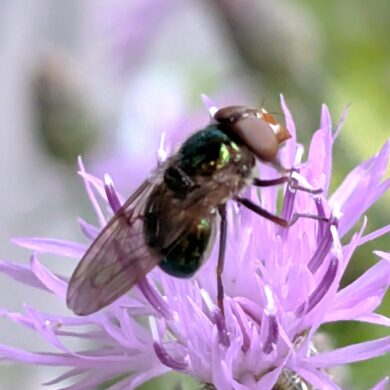
Copestylum vesicularum, found on Martha’s Vineyard by Liz Loucks and an apparent first record for this genus in the islands region. https://www.inaturalist.org/observations/386121211
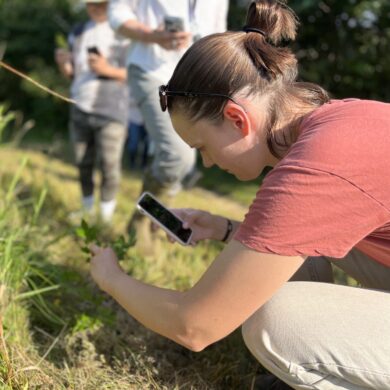
I’ll tell you who won in a moment, but the salient feature of this competition was how much more it felt like a collaboration than a contest. In retrospect, who won seems almost irrelevant. Sure, a lot of naturalists on both islands, myself included, dehydrated themselves repeatedly through dozens of sweaty hours in the field, seeking ever more species to add to their island’s tally. We all really wanted to win! But I don’t think I was alone in cheering a bit when observers on the other island found something rare or interesting. And at some point during the event, I grew as interested in the other island’s discoveries and the overall event totals as I was in the score or my personal species tally.
When the dust had settled, results were simply astounding. Inspired by the rivalry, a total of 272 observers participated across the two islands, documenting a total of more than 2,800 species. These collective efforts added more than 16,500 observations to the iNaturalist database. To put that in perspective, iNaturalist use on Martha’s Vineyard more than tripled during the event relative to the same time frame in 2025. And the roughly 8,100 observations uploaded from the Vineyard represented close to 10% of all the iNaturalist observations ever contributed from that island up to that point. The result of Nantucket’s challenge, then, was a wildly popular celebration of regional diversity and a massive influx of iNaturalist occurrence data from these islands.
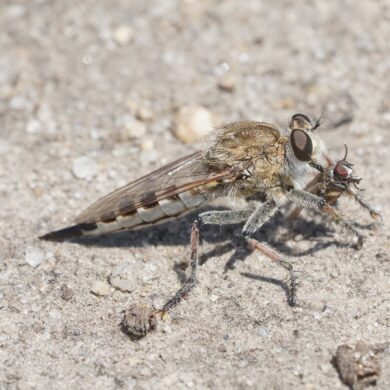
Female Efferia ablibarbis with prey item. A beach-loving robber fly found during the event on Martha’s Vineyard but not Nantucket. https://www.inaturalist.org/observations/389362751
The progress spurred by this event appears to be enduring. Consider, for example, the case of my friend Arthur Battistini, whom I encountered initially in a community musical ensemble and had no idea shared my interest in natural history. Arthur took up arms to defend the Vineyard’s honor, setting up an new iNaturalist account on July 30, 2026, as the BioBlitz ramped up to full speed. He contributed 26 observations to the Vineyard’s tally, a modest sum but not bad at all for a beginning iNat user. Since the event ended, though, Arthur has kept his momentum, contributing a total of almost 400 observations as August was winding down, exploring a wide range of taxa, and getting steadily more deft with his use of iNaturalist. Dozens of BioBlitz participants appear to have followed the same trajectory, coming for the competition but staying because studying nature is fun and rewarding.
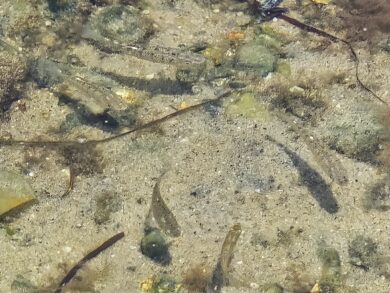
Striped Killifish (Fundulus majalis), found and photographed by new iNaturalist user Arthur Battistini. https://www.inaturalist.org/observations/392758786
And as always happens, the intense coverage during the event turned up large numbers of interesting or significant observations. I haven’t had a chance yet to delve into Nantucket’s results in much detail. But those results undoubtedly show a picture similar to that on the Vineyard, where numerous first records for the island were established. Significant examples include the Copestylum vesicularium, found in Vineyard Haven by Liz Loucks, that is shown above — the first occurrence I am aware of for this interesting genus on either island. Chris Baer somehow scared up the Vineyard’s first-ever eastern ant cricket, Myrmecophilus pergandei, a cryptic Orthopteran that spends most of its time as a nest parasite in subterranean ant nests. And I was lucky enough to stumble over a pugnacious leafcutter bee, Megachile pugnata, in the community garden at Island Grown Initiative, which is as far as I can tell a new county record for this bee. It’s important to note that the higher-level taxa represented here — the fly family Syrphidae, the order Orthoptera, and the epifamily Anthophila — are among the most studied, best known groups on the Vineyard. Good checklists exist for all of them, and new additions to those checklists are infrequent and significant when they happen. The BioBlitz gave a huge boost to nature study across the islands region.
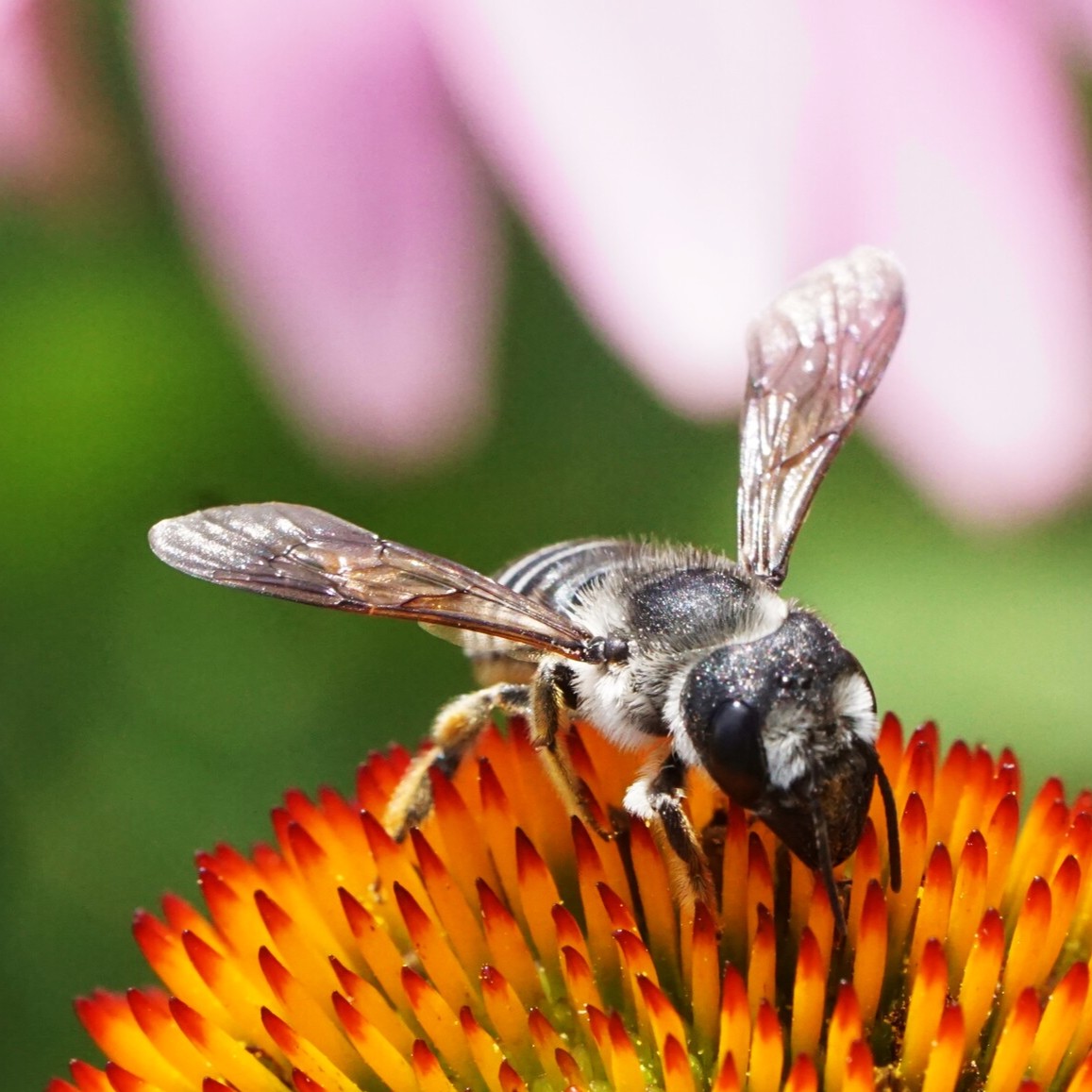
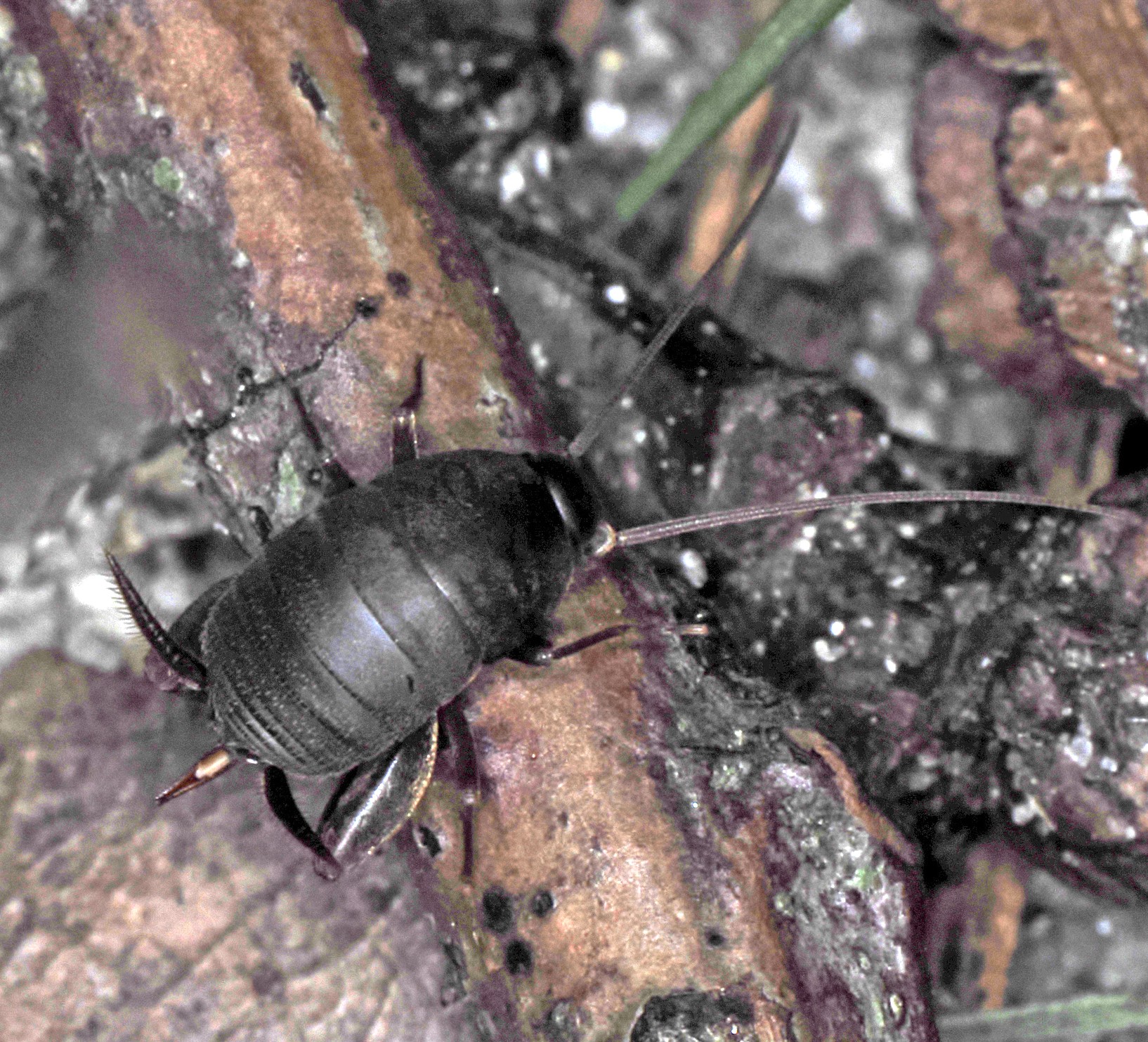
Over time, the results of this event will provide an interesting snapshot on the ecological similarities and differences of the two islands. It’s well known that each island hosts many species that are absent on the other island, and it will be interesting to use this data set to explore the distinctive species mixes and phenology of these interesting little sandbars. But my initial exploration of the data has zeroed in on the human element: each island excelled at finding certain classes of organisms, and to some extent the results reflect distinctly different interests and skill sets in the naturalist communities on the rival islands.
Nantucket soundly drubbed the Vineyard on the botanical front, logging almost 5,000 plant observations and 830 plant species to the Vineyard’s roughly 3,400 and 620. While no single taxon really captures the difference, Nantucket was similarly dominant in aquatic life of all kinds. Overall, Nantucket, which has several years of experience running prolonged, island-wide bioblitzes, ran a much broader-based and more organized effort than Martha’s Vineyard, which had only done single-day, single-site bioblitzes with relatively low participation, managed.
The Vineyard, meanwhile, showed dominance with most insect taxa, perhaps reflecting a longstanding emphasis of the Martha’s Vineyard Atlas of Life project. The Vineyard’s 159 Orthoptera observations and 39 species, versus only 47 observations and 17 species from Nantucket, may partly reflect true differences in abundance and diversity; but it probably also reflects greater interest and more developed skills for studying this group among Vineyard naturalists. Similarly, Martha’s Vineyard deployed blacklights to attract nocturnal arthropods, a method that Nantucket had much less ability to use. As a result, the Vineyard crushed Nantucket on the Lepidoptera front, generating 864 observations and 262 species versus only 261 observations and 129 species from the smaller island. And the Vineyard made much more extensive use of sound recordings as a documentation method, an approach that the MVAL project has been active in encouraging: the Vineyard’s 54 sound observations of 30 species far outstrips the 11 observations and eight species documented with sounds on Nantucket.
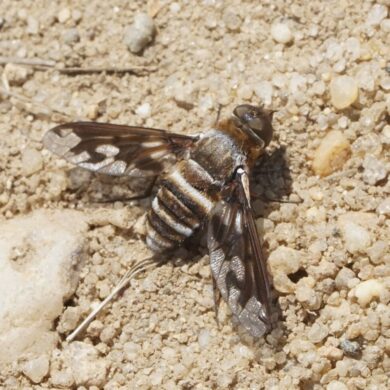
The bee fly (Bombyliidae) Exoprosopa fascipennis, found on both islands during the event. https://www.inaturalist.org/observations/389362776
A final angle I’d like to look at is the contribution BiodiversityWorks made to the event. Our organization is a strongly field-oriented one, and our staff is dominated by serious naturalists (and veteran iNaturalist users). And of course BiodiversityWorks runs that Martha’s Vineyard Atlas of Life project, which we have seen was instrumental in developing skills and knowledge that boosted the Vineyard’s performance during the event. It is no surprise, then, that BiodiversityWorks staff made huge contributions to the BioBlitz. Our eight contributing staff members, representing about 5% of the Vineyard’s participants, accounted for about 44% of all the observations generated on the Vineyard. Collectively, we tallied about 1,900 species, or around 63% of all the species documented on the Vineyard. Four of the nine most prolific observers across the two islands were BiodiversityWorks staff members, and the top three individual species counts were logged by BiodiversityWorks staffers. BiodiversityWorks staff volunteered about 175 hours of personal time in the field during the event, and the organization devoted significant staff time to organizing and publicizing the event and encouraging the broadest participation we could. We have much to be proud of regarding this event.
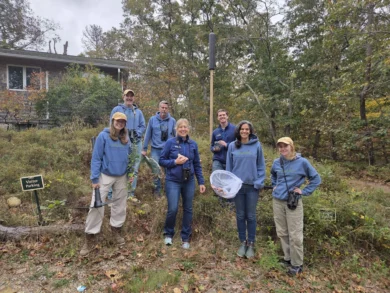
The BiodiversityWorks staff
But the Vineyard team had, in sports parlance, a very deep bench, and substantial contributions came from many observers: a total of 16 Vineyard contributors produced at least 100 observations. Outside of BiodiversityWorks, the two most prolific observers were Chris Baer, a photography and graphic arts teacher at the Martha’s Vineyard Regional High School, and Liz Loucks, land steward and habitat management specialist at the Sheriff’s Meadow Foundation. Chris, already notable for his remarkable macro photography and uncanny ability to find unusual arthropods, documented 264 species with 793 observations. Liz, a fine botanist and very active iNat user, documented 270 species with just 318 observations. In recognition of these efforts, BiodiversityWorks presented Chris (below left) and Liz (below right) with T-shirts we had specially made for the event, using a logo designed by the Linda Loring Nature Foundation.
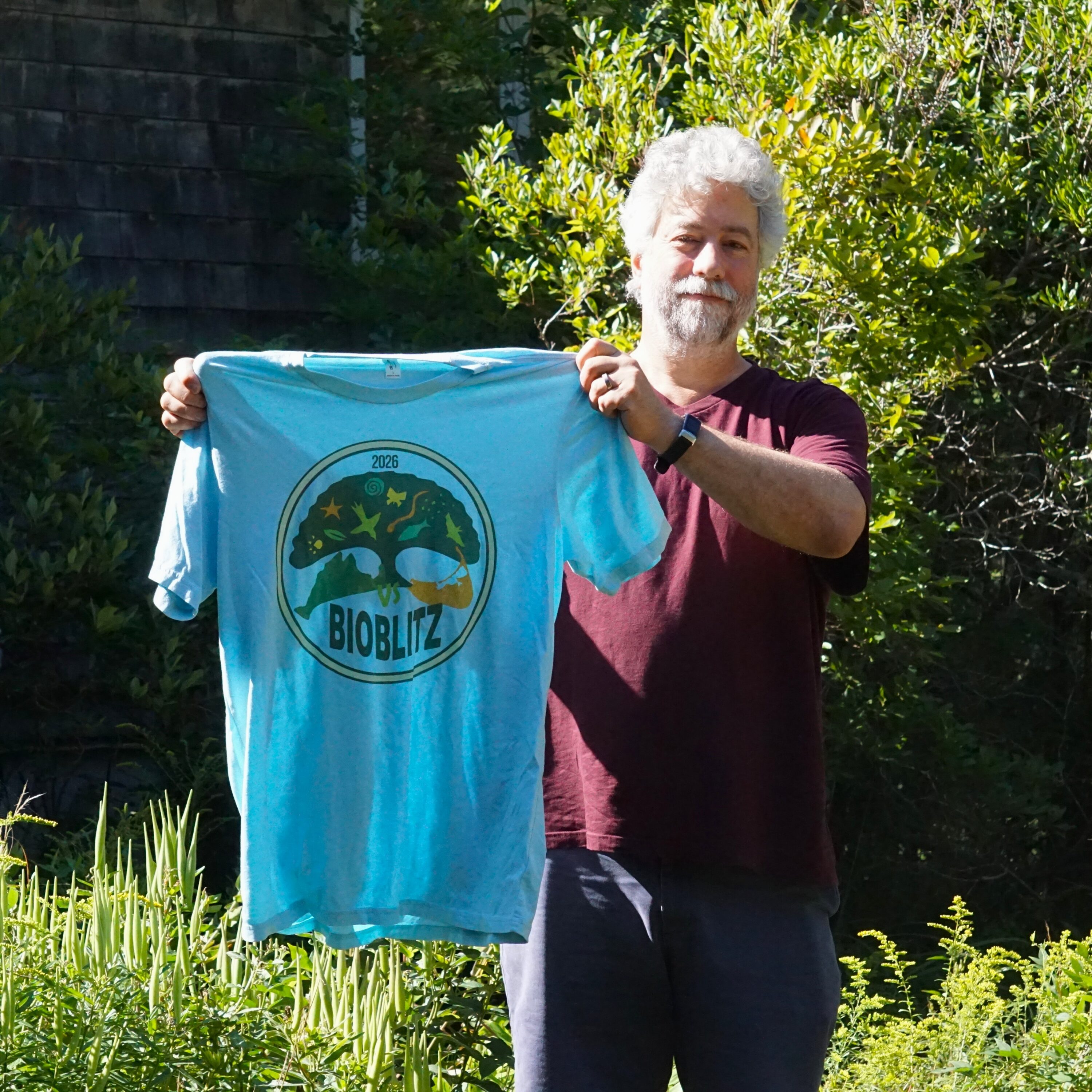
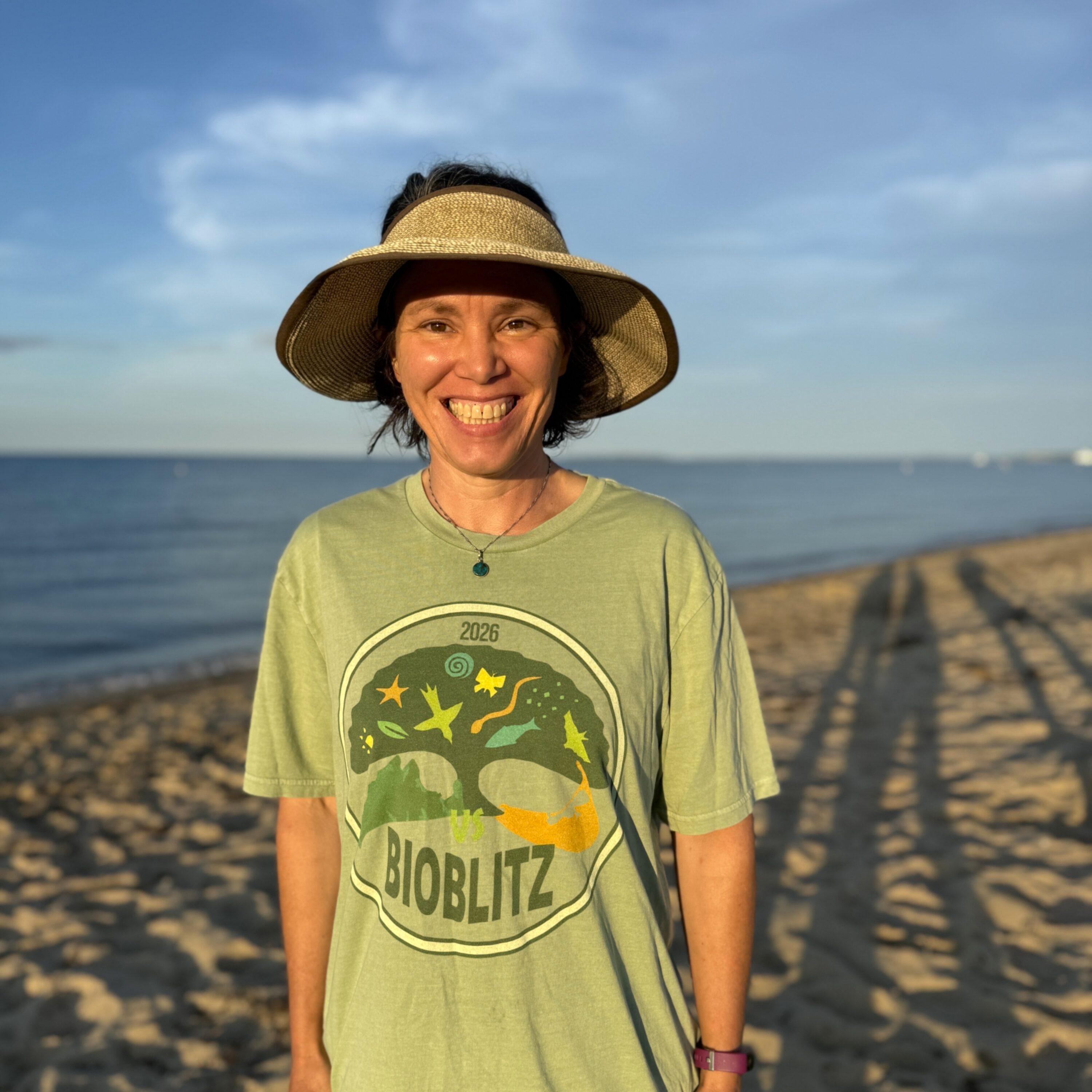
Oh – I almost forgot! The winner? Martha’s Vineyard by a nose. Our 1,692 species (as of August 26 — results will evolve indefinitely as identifications are improved) barely surpassed the 1,669 compiled by Nantucket. Amazingly, Nantucket, despite its smaller size and smaller population, entered more observations than the Vineyard did, 8,386 to 8,105. Knowing how hard the Vineyard team worked, I’m mightily impressed by those figures; our sister island also has plenty of reason to be proud.
And we all have reason to be proud of the distinctive biodiversity of our region, and of the spectacular all-around effort inspired by this event. You can explore results by visiting the Inter-Island BioBlitz iNaturalist project using the button below. And tune in again next year, when we are confident Nantucket will be back, thirsting for revenge!
Matt Pelikan is the community naturalist at BiodiversityWorks and the manager of the Martha’s Vineyard Atlas of Life program. A versatile naturalist and committed iNaturalist user, he placed a close second overall in BioBlitz observations with 1,073 (narrowly edged by colleague Rich Couse’s 1,084) and compiled the highest individual species total with 624. He had fun but will never, ever, EVER work that hard on a bioblitz again.